A Day in the Life of a Health Care Volunteer Vacation Volunteer


October health5

2am: Cocka-doodle-doo! It is way too early to wake up but you know you’re in rural Ecuador and this is to be expected.  After awhile you will fall back asleep, amongst the sounds of the chickens, roosters and the occasional party at the neighbor’s house.

7am: Time to wake up and dress for the day.  I usually wear scrubs, but do NOT forget to bring clothing and gear for all weather occasions.  One morning I awoke to bright sun, high temperatures and by 2pm I was wearing a winter hat, mittens, and a scarf.  Breakfast is served around 7:30 and the bus will leave at 8am to transport us to the particular community we are serving that day.  We may be at a more local community or we may be nearly 2 hours away up a windy “road.”    Half of the adventure (and the beautiful views) are in  the trip  (the journey, not the destination kind of idea).  The countryside really is remarkable.   Drink a lot of water, however! We are at high altitudes and can find ourselves seeing patients at 13, 000 feet at times.

9-10am: Here we go! The patients begin to line up at the site and the volunteers doing ‘intake’ begin to really get busy.  Patients will check in, then proceed to vitals, then on to the medical provider.   We see various ailments ranging from the simple ear infection to complicated pelvic inflammatory disease, to pneumonia, to dermatological concerns, etc.  We provide anti-parasite treatment to all the schoolchildren. October health7 The dentist also begins his/her work performing extractions, sealants, etc.   For the next four hours or so we are busy caring for patients who need medical care, dental care, and vision testing.  As a provider, I enjoy seeing the variety of complaints that will come through the door. Not only that, but I enjoy hearing the stories and really listening to these patients with compassion and love.  A simple touch, hug and words of understanding can make a huge difference, I believe, in the lives of our patients.

1pm: Clinic usually wraps up right around this time. We are packing up our supplies, cleaning, and re-organizing the space as it was before we overtook it with our clinic.  One thing that amazes me when I work with this group is the ability for people of all different walks of life, different ages, different backgrounds to come together and be able to create a well functioning, productive clinic.  We come into the trip not knowing each other’s work habits, personality, backgrounds etc.,  and yet we are able to pull this clinic off, and not only pull it off, but do so in such a collaborative manner.

2014-10-23 14.24.153-6pm:  Now it’s time for some R and R- off to go explore the adventures that can be found in beautiful Ecuador. The day might take us to a waterfall, a cooking class, a visit to a shaman healer or a vibrant town for some shopping.

6-7 pm: Dinner time. This is the best. The food has been delicious. We will often travel into Otavalo and eat dinner at various restaurants. Other nights we will cozy up by the fire.  I suggest getting Churasco – steaks with eggs over easy on top, and who can pass up llapingachos (potato cakes), I mean, come on—delicious! We then will retire to our cozy hacienda, usually chatting around a fire then off to bed to start again the next day.

I can’t express the love and warmth I feel when in this beautiful country. I love to explore new adventures and meet new locals each time I come down here. It has indeed become a 2nd ‘home’ for me. I look forward to returning each year!

Kelly Mccosh

Physician Assistant.


2am: Cocka-doodle-doo! Es una forma para despertarse bien temprano, pero tú sabes estas en una área rural en Ecuador y eso era de suponerse. Después de un momento que quieres  volver a dormir entre los sonidos de las gallinas, gallos y de las fiestas ocasionales en las casas de los vecinos.

7am: Tiempo de levantarse y vestirse para el día. Yo usualmente llevo puesto (scrubs) Pero no olvides llevar ropa y traje para cualquier condición climática. Una mañana yo desperté con un sol brillante, temperaturas altas, y a las 2 yo estaba usando una gorra de invierno, guantes y una bufanda. El desayuno es servido alrededor de las 7:30 y el bus sale a las 8 am para transportarnos a una comunidad en particular donde estaremos dando servicio ese día. Nosotros podríamos estar en una comunidad más local, o nosotros podríamos estar cerca de dos horas lejos en un camino ventoso, la mitad de la aventura (y las vistas más hermosas) son en el viaje, (el camino no la idea del destino). El campo es muy notable. Sin embargo, tomar mucha agua! Nosotros estamos a altas altitudes, y podríamos estar viendo pacientes a los 13000 pies de altura

October health49 a 10 am: Ahí vamos! Los pacientes empiezan hacer una fila a un lado con un voluntario quien toma sus datos, empiezan a estar muy ocupados, los pacientes serán chequeados, entonces proceden a la toma de signos, luego van con el médico. Nosotros miramos varias dolencias, que van desde una simple infección de oído a una complicada dolencia inflamatoria pélvica, de una neumonía a una dolencia dermatológica. Nosotros suministramos tratamientos antiparasitarios a los niños de la escuela. El Dentista también empieza con su trabajo haciendo extracciones y sellantes. Para las siguientes cuatro horas estaremos tan ocupados atendiendo pacientes quienes necesitan atención médica, atención dental, y chequeo de la visión. Como Médico disfruto viendo las diferentes dolencias que vendrán por la puerta, no solo eso, yo disfruto oyendo historias y escuchando a esos pacientes con compasión y amor. Un simple toque, un abrazo o palabras de entiendo pueden hacer una gran diferencia. Yo creo en la vida de nuestros pacientes.

1pm: La Clínica termina justo alrededor de esta hora. Nosotros estamos guardando nuestros suministros, limpiando re-organizando el espacio como este estaba antes, de que nosotros cojamos para nuestra clínica. Una cosa que me sorprende cuando trabajo con este grupo es la habilidad de las personas de todas las diferentes profesiones, diferentes edades, diferentes conocimientos, para venir juntos y ser útiles y crear una Clínica productiva de buen funcionamiento. Nosotros venimos en el viaje sin conocer cada uno de nuestros hábitos de trabajo, personalidad, conocimiento etc. Y a pesar de eso somos útiles de quitar la clínica, y no solo de  quitarla, sino de hacerla así de una forma colaborativa.

image (1)3 a 6pm: Es hora de R y R. para ir a explorar las aventuras que se puede encontrar en este hermoso Ecuador. El día nos puede tomar en una cascada, clases de cocina, a visitar a un shaman, o a ir de compras a la vibrante ciudad.

6 a 7m: Merienda. Esto es lo mejor. La comida ha sido deliciosa. Después nosotros regresamos a nuestra acogedora hacienda usualmente chateando alrededor del fuego, luego a la cama para empezar el siguiente día.

No puedo expresar el amor y la calidez que yo siento en este hermoso país. Yo amo explorar nuevas aventuras, y encontrarme con nuevos lugareños cada vez cuando vengo acá. Esto ha sido para mí como mi 2do hogar. Siempre espero para regresar cada año!

Kelly Mccosh

Asistente Médico


2 heures du matin: Cocorico! Il est trop tôt pour se réveiller, mais vous savez que vous êtes dans la partie rurale d’Equateur et cela est à prévoir. Après certains temps, vous se rendormirez entre les sons des poules, des coqs, et la partie occasionnelle à la maison des voisins.

7 heures du matin: L’heure pour se réveiller et s’habiller pour la reste de la journée. Je porte habituellement des vêtements des blouses, mais je n’oublie pas d’emmener des vêtements et des matériels pour tous les temps. Un des matins, je me suis réveillé par le soleil brillant, des températures élevées, et à 2 heurs de l’après midi je portais un chapeau, des moufles, et une écharpe. Le petit-déjeuner est servi autour de 07h30 et le bus partira vers 8h00 pour nous transporter à la communauté particulaire que nous servions ce jour. C’était possible d’être dans une communauté plus locale, ou dans une communauté à deux heures jusqu’à une route sinueuse. La moitié de l’aventure (et les vues incroyables) c’est le voyage (le voyage, pas le destination, ce type d’idée). Le paysage est remarquable. Mais, buvez beaucoup d’eau ! Nous sommes aux altitudes très élevés et nous pouvons nous trouver à voir des patients à 13,000 pieds de temps en temps.

9-10 heures du matin: On y va !October health3 Les patients commencent à aligner sur le site et les bénévoles qui font « l’admission » commencent à être vraiment occupé. Les patients se font enregistrer, puis procéder à des signes vitaux, puis sur le fournisseur de soins médicaux. Nous voyons des maladies différentes allant entre une infection de l’oreille, à la maladie inflammatoire pelvienne compliqué, à la pneumonie, aux préoccupations dermatologiques, etc. Nous offrons un traitement antiparasite à tous les enfants de l’école. Aussi, le dentiste commence son travail, effectuant des extractions et des pansements dentaires. Pour les 4 heures suivantesnous étions tellement occupésà donner de l’aide aux patients qui avaient besoin de soins médicaux, des soins dentaires, et des tests de vision.  Comme une professionnelle de la sante, j’aime voir la variété des plaintes que viennent par la porte. Mais ce n’est pas seulement ça, j’aime entendre des histoireset vraiment à l’écoute de ces patients avec compassion et admiration. Un touche simple, un câlin et des mots de compréhension peuvent  faire une énorme différence, je crois, dans les vies de nos patients.

13 heures: La clinique se termine généralement souvent à cette heure. Nous emballons nos matériaux, nous nettoyons, et nous réorganisons l’espace comme elle était avant que nous soyons venu avec notre clinique. Une chose qui m’étonne quand je travail avec ce groupe est la capacité pour les gens de tous les horizons de la vie, des âges différents, et des milieux différents de se réunir et de pouvoir créer une clinique qui fonctionne et qui est productive. Nous commençons le voyage ne sachant pas les habitudes de travail des autres personnes, ni les personnalités, ni les milieux etc.  Mais nous sommes capable de compléter cette clinique, et pas seulement la compléter, mais de le faire de manière collaborative.

15-18 heures: Maintenant, c’est l’heure pour un petit peu de reste.image C’est l’heure de trouver les aventures qu’on peut trouver en belle Equateur. La journée pourrait nous emmener à une chute d’eau, un cours de cuisine, une visite à un guérisseur chamanique, ou une ville dynamique pour faire du shopping.

18-19 heures: Le Dîner. Tel est le meilleur.La nourriture a été délicieuse. Nous voyageons souvent à Otavalo et nous mangeons le dîner aux restaurants différents. Les autres soirs, nous nous asseyons près du feu. J’ai suggéré que nous obtenons Churasco – des steaks avec des œufs tournés au dessus, et qui peut dire non à llapingachos (des gâteaux fait avec des pommes de terres), je vous dis, c’est délicieux ! Puis nous nous retirons de notre hacienda confortable, normalement en parlant autour d’un feu, puis nous allons au lit pour commencer le prochain jour.

Je ne peux pas expliquer l’amour et l’amitié que je me sens quand je suis ici dans ce beau pays. J’aime explorer des nouvelles aventures et de rencontrer des nouvelles personnes locales à chaque fois que je reviens. Il est devenu une 2ème maison pour moi. Je suis impatient de revenir chaque année !


Kelly McCosh

Adjoint au Médecin 

Kelly McCosh
Kelly McCosh


What does a local nurse think of Tandana’s work in Ecuador?

by Maria Esther ManrriqueMaria Esther letter


Maria Esther letter2-page-0


esthercita vince
Maria Esther works with a volunteer dentist

Letter of Support

May 30, 2014, Gualsaqui

I am Maria Esther Manrrique Chuma, assistant nurse at the Gualsaqui Health Center.Health1 It is great to have the help of The Tandana Foundation, an organization that has offered excellent support for our public health work in the communities served by the Center.  In addition, we have seen the profound respect The Tandana Foundation has for the cultural beliefs that the communities maintain.  The community members have shown their appreciation by offering and sharing local foods when the volunteer medical teams and center staff arrive to offer health care.

The Tandana Foundation has offered its help in the following ways:

  • Assisting in providing primary care for patients in the communities of Cambugan, Urkusiki, Muenala, Achupallas, Wayrapunku, Cutambi, Wachinquero, by volunteer doctors with different medical specialties.
  • Donation of medications and other supplies for patients from those communities.health3
  • Using portable dental equipment that allows for efficient and effective dental care in the communities and loaning this equipment to the Center.
  • Providing materials for workshops for our “Second Youth” elder group.
  • Providing economic support for the “Second Youth” group to go on outings as a therapeutic activity to improve their health.
  • Providing Tandana volunteers who assist with work at the center and learn how to provide care to people in the remote communities.
  • Providing Tandana volunteers to follow up with patients who need specialized care.

health5These activities have allowed the Foundation to gain the confidence and participation of the communities in our area.  The communities and their leaders approve of these actions. This is evident by their massive participation in the health care days that The Tandana Foundation organizes with the center, as well as by the fact that they share their food with the visiting teams.

Among the positive impacts that we can see in the communities are:

  • The community leaders and members take advantage of the opportunity to use the health care offered by the Foundation and the center.
  • There is a positive response when patients follow the treatments recommended by Tandana doctors and use the medications provided by Tandana.
  • People in the communities often ask when the Foundation will return to offer care in their communities.
  • The supplies donated by the Foundation allow for efficient and effective care for the patients.

For all of these reasons, it is important to support these initiatives and to help the Foundation meet its goals.   I think it is necessary to help people be happy by seeing to and alleviating their pains. health2

Sincerely,

Maria Esther Manrrique Chuma

Lettre d’appui

 30 mai 2014, Gualsaqui

 Je suis Maria Esther Manrrique Chuma, une infirmiere adjointe  au Centre de Santé Gualsaqui. Il est bon d’avoir l’aide de la Fondation Tandana, une organisation qui a offert un excellent soutien pour notre travail de santé publique dans les communautés desservies par le Centre. En outre, nous avons vu le profond respect de la Fondation Tandana a des croyances culturelles que les communautés entretiennent. Les membres de la Health 4communauté ont montré leur appréciation en offrant et en partageant des aliments locaux lorsque les équipes médicales bénévoles et le personnel du centre arrivent à offrir des soins de santé. 

La Fondation Tandana a offert son aide selon les modalités suivantes: 

  • Aider à fournir des soins de santé primaires pour les patients dans les communautés de Cambugan, Urkusiki, Muenala, Achupallas, Wayrapunku, Cutambi, Wachinquero, par des médecins volontaires de différentes spécialités médicales.
  • Don de médicaments et d’autres fournitures pour les patients de ces communautés.
  • Utilisation du matériel dentaire portatif qui permet d’effectuer les soins dentaires efficiente et efficace dans les villages et prêter cet équipement au Centre.
  • Fournir du matériel pour les ateliers pour notre groupe de personnes âgées “une seconde jeunesse”.
  • Fournir un soutien économique pour le groupe “une seconde jeunesse” à des sorties comme une activité thérapeutique pour améliorer leur santé.
  • Fournir des bénévoles qui aident au travail au centre et apprennent à fournir des soins à des personnes dans les collectivités éloignées.
  • Fournir des bénévoles Tandana qui realisent le suivi des patients qui ont besoin de soins spécialisés. 

health 6Ces activités ont permis à la Fondation de gagner la confiance et la participation des communautés dans notre région. Les communautés et leurs dirigeants approuvent ces actions. Cela est évident par leur participation massive dans les jours de soins de santé que la Fondation Tandana organise avec le centre, ainsi que par le fait qu’ils partagent leur nourriture avec les equipes qui visitent. 

Parmi les impacts positifs que nous pouvons voir dans les communautés sont les suivants: 

  • Les dirigeants de la communauté et les membres profitent de la possibilité d’utiliser les soins de santé offerts par la Fondation et du centre.
  • Il ya une réponse positive lorsque les patients suivent les traitements recommandés par les médecins Tandana et utilisent les médicaments fournis par Tandana.
  • Les gens dans les communautés demandent souvent quand la Fondation sera de retour pour offrir des soins dans leurs communautés.
  • Les fournitures offertes par la Fondation permettent des soins efficients et efficaces pour les patients. 

Pour toutes ces raisons, il est important de soutenir ces initiatives et à aider la Fondation à atteindre ses objectifs. Je pense qu’il est nécessaire d’aider les gens à être heureux en voyant à soulager leurs douleurs. 

Cordialement, 

Maria Esther Manrrique Chuma

Tandana Health Care Week, March 24-29, 2014

By Barbara Schenck

After a 9 a.m. breakfast at our lovely hotel, Posada de Quinde, we gathered in the courtyard– nestled in among the mountains– and got our orientation and met one another.  We heard the job description for available positions.  After lunch and a quick Spanish lesson, we all chose our positions and were briefed on our responsibilities.

Tuesday morning we met at breakfast bright eyed and eager to begin.  We loaded the bus and headed up (and I do mean up) to Padre Chupa.  We were enchanted by the children at the school. They were very friendly even though the bus ran over their soccer ball.2014-03-26 13.03.28  We seemed to follow directions satisfactorily and soon the clinic was up and running.  The doctors and dentist saw many patients.  All of the children were evaluated then given a lesson on dental care.  They were very proud of their new toothbrushes and toothpaste.

All of the clinic days were very similar, but each one had its own unique moments.  When I first began to help out with vitals, I seemed to be amusing everyone when I thought I was calling a patient’s name but was actually shouting the name of their village.

The doctors were kept very busy dealing with a variety of illnesses and ages.  The dentist also had a constant stream.  In the vision screening station, some were given referrals to the eye doctor but many left with a new pair of reading glasses.  One older lady could thread every size of needle–the vision test used here–but she wanted glasses anyway “just for sleeping.”

Our welcomes were always warm, at one stop I felt like a politician getting off the bus because every child greeted us with a handshake.  As we set up the clinic, they welcomed us with a shim him himong.  Although our language skills were questionable at best, we were always greeted warmly and thanked profusely by each person we met.

On Friday, we had a harrowing trek up to Muenala. At one point, we measured our altitude at 11,400 feet.  The road was very narrow and had had some severe water damage,  A video camera in the front of the bus would have captured an amusing scene as we leaned toward one side or the other, or applied imaginary brakes to help our very competent driver.  The trip was well worth it; the clouds had lifted and the views were incredible.  The villagers were as delightful as ever.2014-03-29 10.45.15

By Saturday morning, we were all feeling somewhat competent as we arrived at the village of Agualongo.  Our clinic was soon set up, and we enjoyed another successful visit.  We also viewed a few earlier Tandana projects: lights on the soccer field and new roof on the community center.

We arrived back at our hotel for a lovely lunch, and then most of us hit the market for the Saturday sales.  Not to say I am a shopaholic, but I have done my part to stimulate the economy.

We are returning home with wonderful memories, many new friends, and admiration and appreciation for the work of Tandana.

Tandana Brigada Medica, del 24 a 29 de marzo

Por Barbara Schenck

Después de un desayuno a las 9 a.m. en nuestro hotel encantador, Posada de Quinde, nos reunimos en el patio–ubicado en medio de las montañas– y nos dieron nuestra orientación y nos conocimos los unos a los otros. Hemos escuchado la descripción de los puestos disponibles. Después del almuerzo y una rápida lección de español, todos elegimos nuestras posiciones y fueron informados sobre nuestras responsabilidades.

Martes por lhim and him anda mañana nos reunimos en el desayuno con los ojos brillantes y con ganas de empezar. Cargamos el autobús y nos dirigimos hacia arriba (y quiero decir hacia arriba) a Padre Chupa. Nos quedamos encantados con los niños en la escuela. Fueron muy amables a pesar de que el autobús pasó por encima de su pelota de fútbol. Parecia que logramos seguir las instrucciones de manera satisfactoria y pronto la clínica estaba en marcha 2014-03-19 13.20.29he. Los médicos y el dentista vieron muchos pacientes. Todos los niños fueron evaluados y luego recibieron una lección sobre el cuidado dental. Estaban muy orgullosos de sus nuevos cepillos de dientes y pasta dental.

Todos los días de la clínica fueron muy similares, pero cada uno tiene sus propios momentos únicos. Cuando comencé a ayudar con signos vitales, parecía que hize reir a todo el mundo cuando yo pensaba que estaba llamando al nombre de un paciente, pero en realidad estaba gritando el nombre de su comunidad.

Los médicos estaban muy ocupados con una variedad de enfermedades y edades. El dentista también tenía un flujo constante. En la estación de examen de la vista, algunos se les dio referencias al oculista, pero muchos se fueron con un nuevo par de lentes de lectura. Una señora mayor podría enhebrar todos los tamaños de la aguja, el examen de la vista utilizada aquí, pero ella quería lentes ningún modo ” sólo para dormir.”

Nuestros bienvenidas eran siempre cálidas, en una comunidad me sentí como un político, cuando bajaba del autobús porque cada niño nos saludó con un apretón de manos. Mientras organizabamos la clínica, nos dieron la bienvenida con una canción. Aunque nuestros conocimientos del idioma eran cuestionables en el mejor, siempre nos dieron una cálida bienvenida y nos agradecio profusamente cada persona que conocimos.

El viernes, tuvimos un viaje angustioso hasta Muenala. En un momento medimos nuestra altitud a 11,400 pies sobre el nivel del mar. El camino era muy estrecho y había tenido algo de daño grave por agua. Una cámara de vídeo en la parte delantera del autobús hubiera capturado una escena divertida, ya que se inclinó hacia un lado o el otro, o se aplican los frenos imaginarios para ayudar a nuestro conductor muy competente. El viaje valio la pena; las nubes se habían levantado y las vistas eran increíbles. Los habitantes del pueblo eran tan encantadora como siempre.2014-03-21 11.40.57

El sábado por la mañana todos nos sentíamos mas competentes en llegando a la comunidad de Agualongo. Nuestra clínica pronto fue creada y disfrutamos de otra visita exitosa. También vimos algunos proyectos anteriores de la fundación Tandana: alumbrado en el estadio de fútbol y un nuevo techo en la casa comunal.

Llegamos a nuestro hotel para una excelente comida y después la mayoría de nosotros fuimos al mercado de las ventas de los sábados. No digo que soy un adicto a las compras, pero he hecho mi parte para estimular la economía.

Vamos a volver a casa con recuerdos maravillosos y muchos nuevos amigos y admiración y agradecimiento por la labor de Tandana.


Tandana Semaine de Sante, du 24 a 29 mars

par Barbara Schenck

Après un petit-déjeuner a 9 heures à notre hôtel charmant, Posada de Quinde, nous nous sommes réunis dans la cour, niché dans les montagnes et nous avons eu l’orientation et nous nous sommes connus l’un a l’autre. Nous avons entendu la description des postes disponibles. Après le déjeuner et une rapide leçon d’espagnol,  nous avons tous choisi nos positions et ont été informés de nos responsabilités.

Mardi matin, nous nous sommes rencontré au petit déjeuner les yeux brillants et désireux de commencer. Nous avons chargé le bus et on s’est dirige vers le haut (et je dis bien le haut ) à Padre Chupa. Nous avons été enchantés par les enfants à l’école . Ils étaient très sympa même si le bus a couru sur leur ballon de football. Il semble que nous avons pu suivre les directions de façon satisfaisante et bientôt la clinique était en place.2014-03-26 13.03.35 Les médecins et le dentiste ont vu de nombreux patients. Tous les enfants ont été évalués et alors ont recu une leçon sur les soins dentaires. Ils étaient très fiers de leurs nouvelles brosses à dents et dentifrice.

Tous les jours de la clinique étaient très similaires, mais chacun avait ses propres moments uniques. Quand j’ai commencé à aider avec les signes vitaux, il semble que j’ai amuse a tout le monde quand je pensais que je demandais le nom d’un patient, mais en fait j’ai crie le nom de leur village.

Les médecins étaient très occupé avec une variété de maladies et tous les âges. Le dentiste a également eu un flux constant. Dans la station de contrôle de la vision, certains ont reçu des références à l’ophtalmologiste, mais beaucoup sont partis avec une nouvelle paire de lunettes de lecture. Une vieille dame pourrait enfiler toutes les tailles d’ aiguille, le test de vision utilisé ici, mais elle voulait des lunettes, coute que coute, ” juste pour dormir. “

Nos accueils étaient toujours chaleureux, dans une village je me suis senti comme un politicien en descendant de l’autobus parce que chaque enfant nous a accueillis avec une poignée de main. Comme nous l’avons mis en place la clinique, ils nous ont accueillis avec une chanson. Bien que nos compétences linguistiques étaient au mieux, douteux, nous avons toujours été accueillis chaleureusement et remercié avec effusion par chaque personne que nous avons rencontré.

Le vendredi, nous avons eu un chemin extrêmement pénible à Muenala. A un moment, nous avons mesuré notre altitude à 11 400 pieds. La route était très étroite et avait eu des dégâts d’eau sévère. Une caméra vidéo à l’avant de l’autobus aurait capturé une scène amusante que nous penchions vers un côté ou l’autre, ou appliqué les freins imaginaires pour aider notre chauffeur très compétent. Le voyage en valait la peine; les nuages ​​avaient levé et la vue était incroyable. Les villageois étaient aussi charmants que jamais.

Le samedi matin, nous nous sentions tous un peu compétent et nous sommes arrivés au village de Agualongo. Notre clinique a été rapidement mis en place et nous avons apprécié une autre visite réussie. Nous avons aussi regardé quelques projets antérieurs de Tandana:  l’éclairage sur le terrain de football et le nouveau toit sur le centre de la communauté.

Nous sommes rentrés à notre hôtel pour un délicieux déjeuner puis plupart d’entre nous a frappé le marché de la vente de samedi. Pas dire que je suis un accro du shopping, mais j’ai fait ma part pour stimuler l’économie.

Nous sommes de retour à la maison avec de merveilleux souvenirs et beaucoup de nouveaux amis et d’admiration et de gratitude pour le travail de Tandana.


Ten Years with Tandana

ImageWritten by: Laura Nichols

We just wanted to see how they did EKGs. I had seen the machine. The fabled “limb leads” that we always talked about during courses on EKG electrophysiology were not mere sticky pads with gel, but actually clamped on the limbs. There were no EKG techs, so the ED physician carefully clamped on each limb lead, then moved to attaching the suction cup precordial leads to the chest. When the machine wouldn’t turn on, we wheeled the patient to the outlet at the intake desk where the cord could reach. After the first couple seconds it was clear the patient had a left bundle branch block, a possible sign of cardiac ischemia. A few more seconds… It was clear the rhythm was also irregular. P wave, QRS, P wave, QRS, P wave, no QRS. Long pause. The patient was in Mobitz II, second degree heart block. He needed a pacemaker.

We need to call a cardiologist. It’s 4 o’clock. They’ve gone home. We need to have a transcutaneous pacer ready. We don’t have a transcutaneous pacer. Do we have atropine? We have atropine.

We placed a cardiac monitor and wheeled him into the critical care area of the emergency department. The patient was meditating, and his blood pressure was stable, signs that he did not need immediate pacing or atropine. However, persistently his heart rate would pause, pause for a long time, then start in the 30s, 40s, 50s, 60s. A sigh of relief. After several calls, it was arranged for him to transfer to Quito. Hopefully, he made it.

Ten years ago today I first set foot on Ecuadorian soil. I don’t remember the specifics of it that well. The airport, gathering our packs, the drive to the hostel, the street with signs in foreign Spanish words. My future was amorphous. As a senior in highschool, I was still trying decide where to spend the next four years of my life. I am not sure if I was still adamantly proclaiming I would not be a doctor, or if I had started to succumb to the current that would gradually pull me into the profession over the next 8 years.

My time in Ecuador, Bolivia and Peru with the Traveling School was marked by a series of highlights: the Galapagos Islands, Machu Picchu, the Cordillera Blancas, Lake Titicaca… However, the place that I remembered most was the small community of Panecillo outside

Otavalo, due mostly to the connections already established by my Traveling School teacher, Anna, and solidified by the contagious smile of Don Vicente, her host father who graciously shared his home with us for an afternoon during our time in the Otavalo area.

Over the next several years after returning from the Traveling School experience, I worked with the fledgling Tandana Foundation to raise money for a new potable water system in the Panecillo area as the previous apparatus had been broken for several years. I later returned to Ecuador during college as a volunteer in the Gualsaqui subcentro de salud with nurses, Ligia and Maria Ester, and dentist, Gloria. I spent those two and a half months helping out with patient intake, vitals, vaccination campaigns, and whatever generally needed to be done. The nurses primarily cared for the patients as there was no doctor for the majority of my time there. During my stay, I lived with the Fuerez Anrango family, a wonderful and generous family in Panecillo, who taught me, among other things, how to sew a camisa, cook quimbolitos, and milk a cow.

Image

As a first and second year medical student I had the privilege of spending my spring break in Ecuador with the Tandana Foundation in a different capacity, as part of the biannual health brigades, providing primary care and triage services to patients in rural areas. These two experiences, though short, provided me perspective on how NGOs could interact with established local healthcare systems to improve care for rural and marginalized residents.

ImageIt was three, almost four years before I returned to Ecuador again, but on December 28th I boarded a plane with my husband, Brent, and took off toward Panecillo. My husband, two of my medical school friends and I spent time over the next 5 weeks in the Ibarra hospital, the Gualsaqui subcentro de salud and the Mojandita clinic. It was in the Ibarra hospital that we encountered the gentleman with cardiac conduction abnormalities.

As his case illustrates, Ecuador continues to struggle with adequate medical resources. It was often a struggle to obtain MRIs and have CT scans read by a radiologist. Appropriate antibiotics were often scarce. However, I also noted the significant progress that has been made in Ecuadorian healthcare over the last 7 years. When I was first at the subcentro de salud in Gualsaqui, there were two nurses, a dentist and me. Now there is a dentist, a doctor, two nurses, two nursing students, several public health workers, and a nurse midwife. Previously we had one computer with a poorly-organized excel document to keep track of patients. Now there is a computer in each exam room with a public health ministry database record of each patient.

There is no perfect system, and each has its challenges. In Ecuador, the US and across the globe there is a need for improved rural access to care. I discussed multiple times with Ecuadorian physicians their concern regarding the lack of specialist physicians. We laughed as I relayed to them the supersaturation of specialists in our healthcare system in the United States. Though Ecuador continues to have significant (though much less than in years past) parasitic disease, TB and other infectious diseases that are relatively uncommon in the US, it is seeing an increase in the chronic illness that come with development such as hypertension, diabetes, stroke, and heart attacks. While all have access to care in Ecuador, our own country struggles to provide basic services to our citizens without a visit to the emergency department.

I have been so fortunate to have the Tandana Foundation to support me on my journey in Ecuador over the years. Without the support of Anna and her staff, I would never have been able to participate in the cultural and medical exchange that has now spanned a decade. I am so thankful to all those at the Ibarra hospital, Dr. Garcia, my amazing host family, the staff at the Subcentro and the Tandana staff for putting up with us over the past 5 weeks. We all had a great experience. Thanks for the last 10 years.

Nos vemos!

ImageDiez años con Tandana

Escrito por: Laura Nichols

Sólo queríamos ver cómo lo hicieron electrocardiogramas. Yo había visto la máquina. Los legendarios “derivaciones de los miembros” que siempre hemos hablado durante los cursos de EKG electrofisiología no eran meros parches adhesivos con gel, pero en realidad sujetan en las extremidades. No hubo técnicos de EKG, por lo que el médico de urgencias sujetan cuidadosamente en cada derivación de la extremidad, luego se trasladó a unir las derivaciones precordiales de ventosa para el pecho. Cuando la máquina no se encendía, que ruedas al paciente a la salida en el mostrador de admisión en el que éste podría alcanzar. Después de los primeros dos segundos, estaba claro que el paciente tenía un bloqueo de rama izquierda, una posible señal de isquemia cardiaca. A unos segundos más… Estaba claro que el ritmo era también irregular. Onda P, QRS, la onda P, QRS, onda P, no hay QRS. Larga pausa. El paciente se encontraba en Mobitz II, segundo bloque de corazón de grado. Él necesitaba un marcapasos.

Tenemos que llamar a un cardiólogo. Son las 4 de la tarde. Se han ido a casa. Necesitamos tener un marcapasos transcutáneo listo. No tenemos un marcapasos transcutáneo. ¿Tenemos la atropina? Tenemos atropina.

ImageHemos colocado un monitor cardíaco y lo llevaron al área de cuidados críticos del servicio de urgencias. El paciente estaba meditando, y su presión arterial se mantuvo estable, señales de que él no necesitaba estimulación inmediata o atropina. Sin embargo , la persistencia de su ritmo cardíaco se detenía, hacer una pausa por un largo tiempo, a continuación, iniciar en los años 30, 40, 50, 60. Un suspiro de alivio. Después de varias llamadas, se dispuso para él para transferir a Quito. Con suerte, él lo hizo.

Hace diez años hoy por primera vez puse un pie en suelo ecuatoriano. No recuerdo los detalles de la misma que así. El aeropuerto, la recopilación de nuestros paquetes, la unidad para el albergue, la calle con signos de palabras en español extranjeros. Mi futuro era amorfo. En su último año en la secundaria, yo todavía estaba tratando de decidir dónde pasar los próximos cuatro años de mi vida. No estoy seguro de si yo estaba todavía firmemente proclamando que no sería un médico, o si yo había empezado a sucumbir a la corriente que me iba a tirar poco a poco en la profesión en los próximos 8 años.

Mi tiempo en Ecuador, Bolivia y Perú con la escuela itinerante estuvo marcado por una serie de puntos destacados: las Islas Galápagos, Machu Picchu, la Cordillera Blancas, Lago Titicaca… Sin embargo, el lugar que yo recordaba más que nada fue la pequeña comunidad de El Panecillo fuera Otavalo, debido sobre todo a las conexiones ya establecidas por mi profesor de escuela itinerante, Anna, y solidificadas por la sonrisa contagiosa de don Vicente, su padre de acogida que amablemente compartió su casa con nosotros para una tarde durante nuestra estancia en la zona de Otavalo.

Image

En los próximos años después de su regreso de la experiencia Traveling School, he trabajado con la Fundación incipiente Tandana para recaudar dinero para un nuevo sistema de agua potable en la zona Panecillo como el aparato anterior se había roto durante varios años. Después regresé a Ecuador durante la universidad como voluntario en el Gualsaqui Subcentro de Salud con las enfermeras, Ligia y María Ester, y el dentista, Gloria. Pasé los dos meses y medio ayudando con la ingesta de los pacientes, los signos vitales, las campañas de vacunación, y cualquier cosa en general que había que hacer. Las enfermeras se preocupaban sobre todo para los pacientes ya que no había ningún médico para la mayoría de mi tiempo allí. Durante mi estancia, he vivido con la familia Fuerez Anrango, una maravillosa y generosa familia en Panecillo, que me ha enseñado, entre otras cosas, cómo coser una camisa, cocinar quimbolitos y ordeñar una vaca.

ImageComo estudiante de medicina primero y segundo año tuve el privilegio de pasar mis vacaciones de primavera en el Ecuador con la Fundación Tandaña en una capacidad diferente, como parte de las brigadas de salud cada dos años, la prestación de atención primaria y los servicios de triage a los pacientes en las zonas rurales. Estas dos experiencias, aunque corta, me proporcionaron perspectiva sobre cómo las ONG podrían interactuar con los sistemas de salud locales establecidos para mejorar la atención a los residentes rurales y marginadas.

Eran las tres, casi cuatro años antes de regresar a Ecuador de nuevo, pero el 28 de diciembre que se subió a un avión con mi marido, Brent, y se fue hacia el Panecillo. Mi marido, dos de mis amigos de la escuela médica y yo pasamos el tiempo en los próximos 5 semanas en el hospital Ibarra, el Gualsaqui Subcentro de Salud y la clínica Mojandita. Fue en el hospital de Ibarra que nos encontramos al caballero con alteraciones de la conducción cardíaca .

A medida que su caso ilustra, Ecuador continúa luchando con los recursos médicos adecuados. A menudo era una lucha para obtener imágenes de resonancia magnética y tomografías computarizadas han leído por un radiólogo. Los antibióticos apropiados eran a menudo escasos. Sin embargo, también me di cuenta de los importantes progresos que se han realizado en la asistencia sanitaria de Ecuador durante los últimos 7 años. Cuando estuve por primera vez en el Subcentro de salud en Gualsaqui, había dos enfermeras, un dentista y yo. Ahora hay un dentista, un médico, dos enfermeras, dos estudiantes de enfermería, varios trabajadores de la salud pública, y una enfermera partera. Antes teníamos un ordenador con un documento excel mal organizada – para realizar un seguimiento de los pacientes. Ahora hay un ordenador en cada sala de examen con un registro de base de datos del ministerio de salud pública de cada paciente.

No hay un sistema perfecto, y cada uno tiene sus desafíos. En Ecuador, los EE.UU. y en todo el mundo hay una necesidad de mejorar el acceso rural a la atención. Hablé varias veces con médicos ecuatorianos su preocupación por la falta de médicos especialistas. Nos reímos como yo transmití a ellos la sobresaturación de especialistas en nuestro sistema de salud en Estados Unidos. Aunque Ecuador sigue teniendo graves problemas (aunque mucho menos que en años anteriores) enfermedad parasitaria, la tuberculosis y otras enfermedades infecciosas que son relativamente poco común en los EE.UU., se está viendo un aumento en la enfermedad crónica que vienen con el desarrollo, como la hipertensión, la diabetes, accidente cerebrovascular y ataques cardíacos. Mientras que todos tengan acceso a la atención en Ecuador, nuestro país se esfuerza por proporcionar servicios básicos a los ciudadanos sin una visita a la sala de urgencias.

He sido muy afortunado de tener la Fundación Tandaña para apoyarme en mi viaje en el Ecuador en los últimos años. Sin el apoyo de Anna y su personal, yo nunca habría sido capaz de participar en el intercambio cultural y médica que ya ha durado una década. Estoy muy agradecido a todos los que están en el hospital Ibarra, el Dr. García, mi familia increíble, el personal del Subcentro y el personal Tandana por aguantar con nosotros durante las últimas 5 semanas. Todos tuvimos una gran experiencia. Gracias por los últimos 10 años.

Nos vemos!

ImageDix ans avec Tandana

Rédigé par: Laura Nichols

Nous voulions juste pour voir comment ils ont fait des électrocardiogrammes. J’avais vu la machine. Les légendaires “dérivations périphériques” que nous avons toujours parlé pendant les cours sur ECG électrophysiologie n’étaient pas de simples notes autocollantes avec gel, mais en fait serrés sur les membres. Il n’y avait pas de techniciens ECG, de sorte que le médecin de ED soigneusement serrées sur chaque fil de membre, puis déplacé à fixer les ventouses précordiales à la poitrine. Lorsque la machine ne s’allume pas, nous ROUES le patient à la sortie au bureau d’admission où le cordon pourrait atteindre. Après les deux premières secondes, il était clair que le patient avait un bloc de branche gauche, un signe possible de l’ischémie cardiaque. A quelques secondes de plus… Il était clair que le rythme était aussi irrégulier. Onde P, QRS, l’onde P, QRS, l’onde P, aucun QRS. Longue pause. Le patient était en Mobitz, deuxième bloc de coeur de degré. Il avait besoin d’un stimulateur cardiaque.

Nous avons besoin de faire appel à un cardiologue. C’est 04 heures. Ils ont disparu maison. Nous avons besoin d’un stimulateur transcutané prêt. Nous n’avons pas un stimulateur transcutané. Avons-nous l’atropine? Nous avons l’atropine.

ImageNous avons placé un moniteur cardiaque et lui roues dans la zone de soins intensifs du service des urgences. Le patient était en méditation, et sa pression artérielle était stable, signe qu’il n’avait pas besoin de stimulation immédiate ou atropine. Toutefois, la persistance son rythme cardiaque serait une pause, unpause pendant un long moment, puis commencer dans les années 30, 40, 50, 60. Un soupir de soulagement. Après plusieurs appels, il a été arrangé pour lui de transférer à Quito. Heureusement, il l’a fait.

Il ya dix ans aujourd’hui j’ai mis le pied sur le sol équatorien. Je ne me souviens pas les détails de ce bien. L’aéroport, la collecte de nos packs, la voiture de l’ auberge, la rue avec des signes de mots espagnols étrangers. Mon avenir était amorphe. En tant qu’aîné au lycée, j’étais encore en train de décider où passer les quatre prochaines années de ma vie. Je ne sais pas si je suis encore en proclamant catégoriquement que je ne serais pas un médecin, ou si j’avais commencé à succomber au courant cela me tirer progressivement dans la profession au cours des 8 prochaines années.

Mon séjour en Équateur, en Bolivie et au Pérou avec l’ école itinérante a été marquée par une série de points forts: les îles Galapagos, Machu Picchu, la Cordillère Blancas, le lac Titicaca… Cependant, l’endroit que je me suis souvenu le plus, c’était la petite communauté de Panecillo à l’extérieur Otavalo, principalement en raison des connexions déjà établies par mon professeur de l’école itinérante, Anna, et solidifiés par le sourire contagieux de Don Vicente, son père d’accueil qui ont gracieusement partagé sa maison avec nous pour un après-midi au cours de notre temps dans la région de Otavalo.

Au cours des prochaines années après le retour de l’expérience de l’école itinérante, j’ai travaillé avec la Fondation naissante Tandana à amasser des fonds pour un nouveau système d’eau potable dans la région de Panecillo que l’appareil précédent avait été rompu depuis plusieurs années. Je suis retourné plus tard à l’Equateur pendant les études collégiales en tant que bénévole dans le Gualsaqui subcentro de salud avec les infirmières, Ligia et Maria Ester, et le dentiste, Gloria. J’ai passé ces deux mois et demi aider avec admission des patients, les signes vitaux, les campagnes de vaccination, et quelle que soit généralement nécessaire à faire. Les infirmières se préoccupaient bien pour les patients car il n’y avait pas de médecin pour la majorité de mon temps. Pendant mon séjour, j’ai vécu avec la famille Fuerez Anrango, une famille merveilleuse et généreuse dans Panecillo, qui m’a appris, entre autres choses, comment couper une chemise, cuir zarumeño, et traire une vache.

Comme un étudiant en médecine de première et deuxième année, j’ai eu le privilège de passer ma semaine de relâche en Equateur avec la Fondation Tandana à un autre titre, dans le cadre des brigades de santé tous les deux ans, la prestation de soins primaires et les services de triage des patients dans les zones rurales. Ces deux expériences, bien que court, m’a fourni perspective sur la façon dont les ONG pourraient interagir avec les systèmes établis de santé locaux pour améliorer les soins aux résidents des régions rurales et marginalisées.

Il était trois, presque quatre ans avant de revenir à l’Equateur de nouveau, mais le 28 Décembre, je pris l’avion avec mon mari, Brent, et a décollé vers Panecillo. Mon mari, deux de mes amis de l’école de médecine et j’ai passé du temps au cours des 5 prochaines semaines à l’hôpital Ibarra, le Gualsaqui subcentro de salud et la clinique Mojandita. Il était à l’hôpital Ibarra que nous avons rencontré le monsieur à des anomalies de la conduction cardiaque.

Comme son cas illustre, Équateur continue à lutter avec les ressources médicales adéquates. Il est souvent une lutte pour obtenir l’IRM et la tomodensitométrie ont lieu par un radiologist. Antibiotiques appropriés sont souvent rares. Cependant, j’ai également noté les progrès importants qui ont été réalisés dans les soins de santé équatorien au cours des 7 dernières années. Lorsque je suis arrivé à la subcentro de salud en Gualsaqui, il y avait deux infirmières, un dentiste et moi. Maintenant, il ya un dentiste, un médecin, deux infirmières, deux étudiants en soins infirmiers, plusieurs travailleurs de la santé publique, et une sage-femme. Auparavant, nous avions un ordinateur avec un document Excel mal organisé pour suivre les patients. Maintenant, il ya un ordinateur dans chaque salle d’examen avec un dossier de chaque patient de la base de données du ministère de la santé publique.

ImageIl n’y a pas de système parfait, et chacun a ses défis. En Équateur, les États-Unis et dans le monde, il est nécessaire d’améliorer l’accès aux soins en milieu rural. J’ai discuté plusieurs fois avec des médecins équatoriens leur préoccupation concernant le manque de médecins spécialistes. Nous avons ri comme je relayé à veux la sursaturation de spécialistes dans notre système de soins de santé aux États-Unis. Bien que l’Équateur continue d’avoir significative (quoique beaucoup moins que les années passées) maladie parasitaire, la tuberculose et autres maladies infectieuses qui sont relativement rares dans les États-Unis, il est de voir une augmentation de la maladie chronique qui viennent avec le développement tels que l’hypertension, le diabète, AVC et les crises cardiaques. Bien que tous aient accès aux soins en Equateur, notre pays a du mal à fournir des services de base aux citoyens sans une visite à l’urgence.

J’ai eu la chance d’avoir la Fondation Tandana pour me soutenir sur mon voyage en Equateur au cours des années. Sans le soutien d’Anna et son équipe, je n’aurais jamais été en mesure de participer à l’échange culturel et médical qui a duré une décennie maintenant. Je suis tellement reconnaissante à tous ceux à l’hôpital Ibarra, le Dr Garcia, ma famille d’accueil incroyable, le personnel de la Subcentro et le personnel Tandana pour mettre en place avec nous au cours des 5 dernières semaines. Nous avons tous passé un excellent séjour. Merci pour les 10 dernières années.

A bientôt!

Navigating the Public Health System

ImageBy: Isaiah Fischer-Brown 

When I’m not with my host family or in Spanish class, the majority of my time during the week is spent as a public health volunteer through the Tandana Foundation*. This foundation coordinates a variety of local service projects, hosts groups of American volunteers, and also provides scholarships to rural Ecuadorian students to continue their education past the primary level. In the public health sector, their mission is to improve rural community members’ access to basic health care. Although this care is provided at no cost by the government, there remain many unmet needs in the system. Having been sick here myself quite a few times, it is apparent to me that patients do not get the privacy or attention they deserve. Everyone could listen in and witness my appointment, and the doctor simply prescribed me pain medicine, which did not treat the underlying issue. Tandana seeks to fill in these gaps; they support local health professionals with added supplies, set up free one-day clinics in the most rural of communities with groups of doctors serving as medical brigades, and follow up with patients regarding treatment and health improvement.Image

My official position with Tandana is a Coordinador de Actividades de Salud (sounds fancier than it is). As the title would suggest, depending on the week, I coordinate different activities surrounding public health. When the group of American doctors came for our first medical brigade (the next one is in March), I took vitals for incoming patients. I learned not only how to take blood pressure and pulse, but also witnessed how necessary these rural clinics were. Since there is little transportation to these communities, the patients would need to walk hours just to schedule an appointment, often for a different day. Here the mission of Tandana became clear, as each patient that came through intake was full of not just gratitude, but trust in the organization. As part of the medical brigades, Tandana also conducts patient follow-up, as many patients are referred to specialists for advanced care. My current project is to help children referred by our clinics to the ophthalmologist receive the necessary further treatment, which will be provided by a foundation called Vista Para Todos.

Another project of mine is to find an ENT doctor, also known as an otorrinolaringologo, in the area, and then set up volunteer positions for a group of doctors coming in January. While this may sound easy, I can’t just do a quick Google search or call a phone number, as neither of those will get me any information. Though there isn’t one in Otavalo, when I asked my Spanish teacher if she knew of a doctor for orejas, nariz y garganta, she responded that she thought there was one at the Clinica Metropolitana, and from there I started my search. After giving my spiel about the qualifications of our volunteers, I was informed that they did not need anyone, but that I should try at the hospital. The following week I headed over to the large Hospital San Vicente de Paul, where after a series of secretaries and explanations in mediocre Spanish, I landed at the desk of the director. She first asked for my documentation (I am foreign and 18, I had nothing) and then informed me that in their hospital they also did not need volunteers, despite the crowded rooms and seemingly constant flow of patients. After talking about the values of a volunteer experience, discussing the excellence of our volunteers (despite having never met them) and basically pleading with the director, she said that she would discuss the opportunity with the ENT doctor and get back to me next week. Though I will be talking further with the hospital, I definitely considered this a small victory.

Image

Through Tandana, I have access to the schools in the communities outside of Otavalo. Here we give charlas, or health talks, to promote well being. The first one I ever gave was on the importance of handwashing and the proper technique. I explained to a class of 5 year olds that they had millions of microbes on their hands; I think that blew some minds, and in retrospect probably should have started off with the activity. The activity consisted of using glitter to express germs and having them wash their hands until they got it all off, demonstrating the time and force needed to actually clean one’s hands. I think they got the point, and despite a dog and chicken walking in the classroom, the kids were mostly on task and focused. My next charla was given to a 6th grade class at the Gualsaqui School. While speaking to the crowded 47-kid class about being nice to one another, they were passing notes and a small fight even broke out. I hope that the kids got something out of it, but maybe it would be better to give this talk to younger kids in order to stop this behavior in the future. It also made me appreciate the smaller classes and caring teachers I had access to during my school experience. My most recent talk was about proper teeth brushing. This was never really taught to kids since they don’t really go to the dentist frequently. With delicious 10c ice cream available outside the school, it is no wonder to me that many have to get teeth pulled before they are 18.

ImageThat particular line of work has given me quite a few fun stories, whether I am being chased by a bull through the mountains in a rainstorm for crossing through a farm, or taking vitals of a 90 year old indigenous woman speaking to me only in kichwa. All of this contributes to me having a rather hectic schedule, but it keeps things interesting. Believe it or not, even with all of this going on, I find 3 days a week to work at a Subcentro! Subcentro is a medical clinic that is run by the government. When deciding where to spend the rest of my time volunteering I knew I was really enjoying my work through the Tandana Foundation and I knew that I wanted to find another aspect of public health to explore.
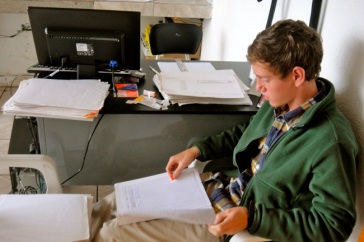
More about Subcentro in my next blog post.

*For more information, visit http://www.tandanafoundation.org/

Navegando en el Sistema de Salud Pública

Escrito por: Isaiah Fischer-Brown

ImageCuando no estoy con mi familia de acogida o en la clase de español, la mayoría de mi tiempo durante la semana se gasta como voluntaria de la salud pública a través de la Fundación Tandana *. Esta fundación coordina una variedad de proyectos de servicio locales, acoge grupos de voluntarios estadounidenses, y también proporciona becas a estudiantes de zonas rurales de Ecuador para continuar su educación más allá del nivel primario. En el sector de la salud pública, su misión es mejorar el acceso miembros de la comunidad rural a la atención básica de salud. Aunque este tipo de atención se ofrece sin costo por el gobierno, sigue habiendo muchas necesidades no satisfechas en el sistema. Después de haber estado enfermo aquí mismo unas cuantas veces, es evidente para mí que los pacientes no reciben la privacidad o la atención que merecen. Todo el mundo puede escuchar y ser testigo de mi nombramiento, y el médico sólo me recetó medicamentos para el dolor, que no tratar el problema subyacente. Tandaña busca llenar estos vacíos, sino que soportan los profesionales de salud locales con suministros agregados, establecer clínicas gratuitas de un día en la más rural de las comunidades con grupos de médicos que actúa como brigadas médicas, y el seguimiento con los pacientes con respecto al tratamiento y la mejora de la salud.

Mi posición oficial con Tandana es un Coordinador de Actividades de Salud (suena más elegante de lo que es). Como el título sugiere, en función de la semana, coordinó diferentes actividades en torno a la salud pública. Cuando el grupo de médicos estadounidenses llegó para nuestra primera brigada médica (la próxima es en marzo), tomé los signos vitales de los pacientes que llegan. Aprendí no sólo cómo tomar la presión arterial y el pulso, sino también testigo de cuán necesario estas clínicas rurales eran. Puesto que hay poco transporte a estas comunidades, los pacientes tendrían que caminar horas sólo para hacer una cita, a menudo para un día diferente. Aquí la misión de Tandana hizo evidente, ya que cada paciente que vino a través de la ingesta estaba lleno no sólo de gratitud, pero la confianza en la organización. Como parte de las brigadas médicas, Tandana también lleva a cabo el seguimiento del paciente, ya que muchos pacientes son referidos a especialistas para el cuidado avanzado. Mi proyecto actual es la de ayudar a los niños referidos por nuestras clínicas al oftalmólogo reciben el tratamiento adicional es necesario, que será proporcionada por una fundación llamada Vista Para Todos.

ImageOtro proyecto de la mina es encontrar un otorrinolaringólogo, también conocido como un Otorrinolaringologo, en la zona, y luego configurar los puestos de voluntarios de un grupo de médicos que vienen en enero. Si bien esto puede parecer fácil, no sólo puedo hacer una rápida búsqueda en Google o llamar a un número de teléfono, ya que ninguno de los que me va a obtener cualquier información. Aunque no hay una en Otavalo, cuando le pregunté a mi profesor de español si sabía de un médico para orejas, nariz y garganta, ella respondió que ella creía que había una en el Hospital Clínica Metropolitana, ya partir de ahí empecé mi búsqueda. Después de dar mi perorata sobre las calificaciones de nuestros voluntarios, se me informó que no necesitaban a nadie, pero que debo tratar en el hospital. A la semana siguiente me dirigí al gran Hospital San Vicente de Paul, donde después de una serie de secretarios y explicaciones en español mediocre, aterricé en el escritorio del director. Ella primero me pidió mi documentación (soy extranjero y 18 años, que no tenía nada) y luego me informó que en su hospital también no necesitan voluntarios , a pesar de las salas llenas de gente y flujo aparentemente constante de los pacientes. Después de hablar de los valores de una experiencia de voluntariado, discutiendo la excelencia de nuestros voluntarios (a pesar de tener nunca los conoció) y, básicamente, suplicando al director, me dijo que iba a hablar de la oportunidad con el médico ORL y volver a mí la próxima semana. Aunque voy a hablar más con el hospital, que sin duda consideraba esto una pequeña victoria .

A través Tandana, tengo acceso a las escuelas de las comunidades fuera de Otavalo. Aquí le damos charlas, o charlas de salud, para promover el bienestar. El primero que he di fue en la importancia del lavado de manos y la técnica adecuada. Le expliqué a una clase de niños de 5 años que tenían millones de microbios en las manos, creo que hizo volar algunas mentes, y en retrospectiva, probablemente debería haber comenzado con la actividad. La actividad consistió en el uso de purpurina para expresar los gérmenes y que ellos se lavan las manos hasta que llegaron por si fuera poco, lo que demuestra el tiempo y la fuerza necesaria a las manos del uno realmente limpio. Creo que tienen el punto , ya pesar de un perro y el pollo a pie en el aula, los niños estaban en su mayoría en la tarea y concentrado. Mi siguiente charla fue dada a una clase de sexto grado en la Escuela Gualsaqui. Al hablar a la concurrida clase 47 para los chicos de ser amables unos con otros, que estaban pasando notas y una pequeña pelea, incluso estallaron. Espero que los niños nos dieron algo de él, pero tal vez sería mejor dar esta charla a los niños más pequeños con el fin de detener este comportamiento en el futuro. También me hizo apreciar las clases más pequeñas y maestros dedicados que he tenido acceso durante mi experiencia en la escuela. Mi más reciente charla fue sobre el cepillado de dientes correcto. Esto nunca fue enseñada a los niños, ya que en realidad no van al dentista con frecuencia. Con deliciosos helados 10c disponibles fuera de la escuela, no es de extrañar a mí que muchos tienen que conseguir los dientes extraídos antes de los 18.

Esa línea de trabajo en particular me ha dado un buen número de historias divertidas, si estoy siendo perseguido por un toro a través de las montañas en una tormenta para el cruce a través de una granja, o tomar los signos vitales de una mujer indígena de 90 años que me hablaba sólo en kichwa. Todo esto contribuye a que yo tenga un horario bastante agitado, pero mantiene las cosas interesantes. Lo creas o no , incluso con todo esto sucede, encuentro 3 días a la semana para trabajar en un Subcentro! Subcentro es una clínica médica que está dirigido por el gobierno. Al decidir dónde pasar el resto de mi tiempo como voluntario sabía que estaba disfrutando mucho de mi trabajo a través de la Fundación Tandaña y sabía que yo quería encontrar otro aspecto de la salud pública para explorar.

Más sobre Subcentro en mi próximo post.

* Para obtener más información, visite http://www.tandanafoundation.org/

Naviguer dans le système de santé publique

Rédigé par: Isaiah Fischer -Brown

ImageQuand je ne suis pas avec ma famille d’accueil ou en classe d’espagnol, la majorité de mon temps au cours de la semaine est consacrée en tant que bénévole de la santé publique par la Fondation Tandana *. Cette fondation coordonne une variété de projets de services locaux, accueille des groupes de volontaires américains, et offre des bourses à des étudiants équatoriens rurales à continuer au-delà du niveau primaire leur éducation aussi . Dans le secteur de la santé publique, leur mission est d’améliorer l’accès aux soins de santé de base des membres de la communauté rurale de. Bien que cette prise en charge est fournie sans frais par le gouvernement, il reste de nombreux besoins non satisfaits dans le système. Après avoir été malade moi-même ici à quelques reprises, il est évident pour moi que les patients ne reçoivent pas la vie privée ou de l’attention qu’ils méritent. Tout le monde peut écouter et assister à mon rendez-vous, et le médecin m’a prescrit simplement la médecine de la douleur, qui ne traite pas le problème sous-jacent. Tandana vise à combler ces lacunes; ils soutiennent les professionnels de la santé locaux avec des fournitures supplémentaires, mis en place des cliniques gratuites d’une journée dans la plus rurale des communautés avec des groupes de médecins siégeant en tant brigades médicales, et le suivi des patients en matière de traitement et l’amélioration de la santé.

Ma position officielle avec Tandana est un Coordinador de Actividades de Salud (sons fantaisistes que c’est). Comme le titre le suggère, selon la semaine, je coordonne différentes activités entourant la santé publique. Lorsque le groupe de médecins américains est venu pour notre première brigade médicale (la prochaine est en Mars), j’ai pris les signes vitaux des patients entrants. J’ai appris non seulement à prendre la tension artérielle et du pouls, mais aussi vu comment nécessaire ces cliniques rurales étaient . Comme il ya peu de transport de ces communautés, les patients auraient besoin de marcher des heures juste pour un rendez-vous, souvent pour un autre jour. Voici la mission de Tandana est devenu clair, que chaque patient qui est venu par l’apport était plein de gratitude non seulement, mais la confiance dans l’organisation. Dans le cadre des brigades médicales, Tandana effectue également le suivi des patients, de nombreux patients sont référés à des spécialistes pour des soins avancés. Mon projet actuel est d’aider les enfants visés par nos cliniques chez l’ophtalmologiste reçoivent le traitement supplémentaire nécessaire, qui sera fournie par une fondation appelée Vista Para Todos .

Un autre projet de la mine est de trouver un médecin ORL, aussi connu comme un otorrinolaringologo, dans la région, et ensuite mettre en place des postes de bénévoles pour un groupe de médecins à venir en Janvier. Même si cela peut sembler facile, je ne peux pas faire une recherche rapide sur Google ou appeler un numéro de téléphone, ni de ceux que m’apportent aucune information. Bien qu’il n’y ait pas un à Otavalo, quand j’ai demandé à mon professeur d’espagnol si elle connaissait un médecin pour orejas, nariz y garganta, elle a répondu qu’elle pensait qu’il y en avait un à la Clinica Metropolitana, et à partir de là, j’ai commencé ma recherche . Après avoir donné mon laïus sur les qualifications de nos bénévoles, j’ai été informé qu’ils n’avaient pas besoin de personne , mais que je devrais essayer à l’hôpital. La semaine suivante, je me dirigeai vers le grand hôpital San Vicente de Paul, où, après une série de secrétaires et d’explications médiocre espagnol, j’ai atterri au bureau du directeur . Elle a d’abord demandé à mes documents (je suis étrangère et 18, je n’avais rien) et puis il m’a informé que dans leur hôpital, ils n’ont pas non plus besoin de bénévoles, malgré les salles bondées et les flux apparemment constante des patients. Après avoir parlé des valeurs d’une expérience de bénévolat, de discuter de l’excellence de nos bénévoles (en dépit de n’avoir jamais à leur rencontre) et essentiellement plaidé avec le directeur, elle a dit qu’elle examinerait la possibilité avec le médecin ORL et revenir à moi la semaine prochaine. Bien que je vais parler plus loin avec l’hôpital, j’ai vraiment considéré cette une petite victoire.Image

Grâce Tandana, j’ai accès aux écoles dans les communautés à l’extérieur d’Otavalo. Ici, nous donnons charlas ou causeries sur la santé, afin de promouvoir le bien-être. Le premier que j’ai jamais donné était sur ​​l’importance du lavage des mains et la bonne technique. J’ai expliqué à une classe de jeunes de 5 ans qu’ils avaient des millions de microbes sur les mains, je pense que sauter certains esprits, et avec le recul probablement dû commencer le match avec l’activité. L’activité consistait à utiliser des paillettes à exprimer les germes et les faire laver les mains jusqu’à ce qu’ils obtiennent le tout, démontrant le temps et la force nécessaire pour les mains de réalité propre un. Je pense qu’ils ont le point, et malgré un chien et la marche de poulet dans la salle de classe, les enfants étaient la plupart du temps sur la tâche et concentré. Mon prochain charla a été donné à une classe de 6e année à l’école Gualsaqui. Tout en parlant à la foule classe 47 – enfant d’être agréable à l’autre, ils passaient des notes et une petite lutte même éclaté . J’espère que les enfants ont eu quelque chose hors de lui, mais peut-être il serait mieux de donner ce discours pour les jeunes enfants afin d’arrêter ce comportement dans l’avenir. Il a également m’a fait apprécier les petites classes et d’enseignants bienveillants j’avais accès à cours de mon expérience de l’école. Ma plus récente conversation était sur le brossage de dents correct. Cela n’a jamais été vraiment enseigné aux enfants car ils ne vont pas vraiment chez le dentiste régulièrement. Avec délicieuse crème glacée 10c disponibles à l’extérieur de l’école, il n’est pas étonnant pour moi que beaucoup ont à obtenir des dents tirés avant 18 ans.

Cette ligne de travail particulier m’a donné pas mal d’histoires amusantes , si je suis poursuivi par un taureau à travers les montagnes dans une tempête de pluie pour en traversant une ferme, ou de prendre les signes vitaux d’un 90 ans femme indigène qui me parlait seulement en Kichwa. Tout cela contribue à moi d’avoir un horaire plutôt chargé, mais il rend les choses intéressantes. Croyez-le ou non, même avec tout cela se passe, je trouve 3 jours par semaine à travailler à un Subcentro! Subcentro est une clinique médicale qui est géré par le gouvernement. Lors du choix de passer le reste de mon temps au bénévolat, je savais que j’étais vraiment mon travail à travers la Fondation Tandana et je savais que je voulais trouver un autre aspect de la santé publique à explorer.

Plus de Subcentro dans mon prochain blog .

* Pour plus d’informations , visitez http://www.tandanafoundation.org/


La Danza de la Fundacion Tandana

Hola soy  Margarita Fuerez, estudiante de universidad y becada de la fundación Tandana. Soy de Otavalo- Ecuador.

Deseo compartir de la participación con la danza que fue con los extranjeros voluntarios en las Fiestas de  QUICHINCHE, en la noche del 16 de marzo del 2013, el pregón de fiestas.

En este día desde la tarde ya empiezan a  arreglar el carro alegórico que ira por la calle esta noche. Junto a Anna Taft  están las familias ecuatorianas y extranjeros ayudando  a arreglar el carro para que este muy bonito. Al caer la tarde ya terminan y todos se acercan a la calle principal con muchas ganas de participar. En este carro estaba la reina, el músico y los adornos todo  estaba muy bonito, detrás de este carro todos los voluntarios y yo danzamos la danza Otavaleña que yo les prepare un día antes del pregón de fiestas. Cuando llega el momento todo bailamos muy felices y todo el tiempo nos divertimos mucho.

SONY DSC
The Panecillo float, featuring Tandana scholarship student Monica Imba as queen

Fue algo muy lindo porque toda la gente nos miraban y nos  saludaban era un recorrido un poco largo pues aquí participaban muchas comunidades con diferentes danzas, es muy bonito disfrutar de estas fiestas porque cada comunidad presenta diferentes danzas de colores variados, además solo dura como aproximadamente dos horas como empieza a las 7:00 pm y terminan a las 9:00 pm. Cuando ya terminamos esta danza algunos se acercan y felicitan por la participación que lo realizamos…. Pero es algo admirable para mí cuando las personas piensan  que soy auxiliar de enfermera y me felicitan.   Yo enseguida digo que no es verdad yo solo soy colaboradora  con la danza junto a los extranjeros  y que la gente sepa que existe la visita y participación  de los extranjeros  con intención de ayudar en las comunidades alejadas de la cuidad, porque la Fundación ha visitado casi todas las comunidades por lo tanto  cuando miran a los extranjeros saben que ellos son médicos y curan a las personas en las comunidades.

Bueno en lo personal estoy muy feliz de poder compartir con los extranjeros de esta manera espero que la gente me conozca, además me gusta estar con ellos así tener momentos de alegría porque converso con ellos y así comparto mi cultura y tradición.

Me gusta porque los extranjeros también son muy buenos, divertidos y chistosos, cuando enseñe la danza aprendieron muy rápido.

Volunteers get into the spirit during the parade

Muchas gracias por darme la oportunidad de compartir con los extranjeros, yo siempre estaré dispuesta a colaborar cuando usted desee.

Este es mi experiencia con los extranjeros que quería compartir  con toda la familia de Fundación Tandana

Hasta la próxima oportunidad.  …  Chao.

 Hi I’m Margarita Fuerez, a Tandana Foundation university scholarship student.  I’m from Otavalo, Ecuador.

I want to share about my participation in the dance that we did with the Tandana volunteers in the Quichinche Fiestas, on the night of March 16, 2013, in the parade opening the festival.

The Tandana dancers
The Tandana dancers
Margarita and her sister lead the volunteers in their dance
The Tandana float
The Tandana float

On this day they were fixing up the float that would go down the street at night. Along with Anna Taft were Ecuadorian families and foreign volunteers helping fix the car so it would be really nice. By late afternoon they were finished and all came to the main street eager to participate. On the float were the queen, the musician and everything was very nicely decorated.  Behind the float, all of the volunteers and I danced the Otavalan dance I taught them the day before the parade. When the time came to dance, we were all so happy and really enjoyed ourselves the whole time.

It was really neat because all the people looking at us and greeted us.  The parade was long, because many communities came to perform different dances.  It is very nice to enjoy the festivities because each community has different dances with different colors, and it lasts only approximately two hours, as it starts at 7:00 pm and ends at 9:00 pm. When the dance ended, people came and congratulated us on our participation …. But it surprised me when people thought I was an auxiliary nurse and congratulated me. I immediately told them it wasn’t true, that I was just collaborating in the dance and letting people know that the foreign volunteers came to visit and participate, intending to help the remote communities, because the Foundation has visited nearly all the Quichinche communities, so when they look at foreigners they know they are doctors who cure people in communities.

Well personally I am very happy to share with foreign volunteers, so I hope people know me, plus I like to be with them and have moments of joy as well as talk to them and share my culture and tradition.  I like it because the volunteers are also very good, fun and humorous.  When I was teaching them the dance, they learned very fast.

Thank you very much for giving me the opportunity to share with the visitors, I will always be ready to work when you want. This is my experience with Tandana volunteers, which I wanted to share with the whole family of The Tandana Foundation.

Until next time. … Bye.

Salut je suis Margarita Fuerez, une étudiante de bourses universitaires de la Fondation Tandana. Je suis d’Otavalo en Equateur.

Je tiens à partager au sujet de ma participation à la danse que nous avons fait avec les bénévoles de Tandana dans les fêtes de Quichinche, dans la nuit du 16 Mars 2013, au défilé de l’ouverture du festival.

SONY DSC
Barrio Santa Clara shares its dance

En ce jour, ils fixaient le flotteur qui irait dans la rue la nuit. Avec Anna Taft il y avait des familles équatoriennes et les volontaires étrangers qui aidaient a préparer la voiture pourque ca soit vraiment sympa. Vers le petit soir ils ont terminés et ils sont tous venus à la rue principale désireux de participer. Sur le flotteur il y avait la reine, le musicien et tout était très joliment décorée. Derrière le flotteur, tous les volontaires et moi, nous avons dansé la danse Otavalien que je leur ai appris la veille du défilé Quand vint le moment de danser, nous étions tous si heureux et nous sommes vraiment amusés tout le temps.

C’était très intéressant parce que tous les gens nous regardaient et nous ont accueillis. Le défilé a été long, car de nombreuses communautés sont venus pour montrer différentes danses. Il est très agréable de profiter des festivités parce que chaque communauté a ses propres danses avec des couleurs différentes, et il ne dure que deux heures environ, car il commence à 19h00 et se termine à 21h00. Quand la danse est terminée, les gens sont venus et nous ont félicité pour notre participation …. Mais il m’a surpris quand les gens pensaient que j’étais une infirmière auxiliaire et m’ont félicité. J’ai leur ai dit immédiatement que ce n’était pas vrai, que j’ai juste collaboré à la danse pour faire savoir aux populations que les volontaires étrangers sont venus visiter et participer, avec l’intention d’aider les villages éloignées, parce que la Fondation a visité presque toutes les villages de Quichinche, Alors, quand ils regardent les étrangers, ils savent qu’ils sont des médecins qui soignent les personnes dans les villages.

Eh bien, personnellement, je suis très heureuse de partager avec les volontaires étrangers, alors j’espère que les gens me connaissent, plus j’aime être avec eux et avoir des moments de joie, ainsi que de leur parler et de partager ma culture et tradition. Je l’aime parce que les volontaires sont également très bons, amusants et plein d’humour. Quand je leur enseignait la danse, ils ont appris très vite.

Merci beaucoup de m’avoir donné l’occasion de partager avec les visiteurs, je serai toujours prêt à travailler quand vous voulez. C’est mon expérience avec les volontaires de Tandana, que je voulais partager avec toute la famille de la Fondation Tandana.

Jusqu’à la prochaine fois. … Bye.

Health Care Volunteer Vacation program has grown and improved!

by Jean McCabe

Image
Jean works with other volunteers to do vision screening

Five years ago I went on my first volunteer vacation withTandana with my oldest daughter when she was a junior in college majoring in accounting and spanish.  This spring I repeated that trip with my youngest daughter who was also a junior in college and majoring in business.  I am an RN with somewhat rusty skills and my daughters have no medical experience so we weren’t sure what to expect or if we could be useful on this type of trip.  We discovered that the trip was not only beneficial to us personally but on both trips we felt we were able to positively contribute to the mission of the week.

Patients receive their medications in Tandana's "pharmacy"
Patients receive their medications in Tandana’s “pharmacy”
Volunteers take vitals
Pediatricians perform checkups on schoolchildren
Santos, a shaman, shares his philosophy of healing

Upon our return to the US, Lauren had to write a persuasive paper for one of her classes and chose to persuade people to consider going on a mission trip.  She summed up her experiences on this trip as being either for her personal growth and development or enhancing the life of others.  She felt she gained an appreciation of different lifestyles from observing the living conditions of the people we were serving and it made her realize how much people in the US takes for granted, like running water, a washing machine, kitchen appliances, education and medical care.  What she considered “normal” in her daily life took on a new perspective.  We both felt the people we encountered were generally happy and so appreciative of the help we were able to offer them.  Despite our language barriers we were able to communicate with them and let them know we were there to help.  We also enjoyed the extra curricular activities we were able to participate in; particularly the afternoon with the Shaman, the cooking class and the hike down the mountain to the waterfall.  It gave us a better understanding of the culture and the environment they live in.

Interacting with the other volunteers on the trip was also a positive experience.  Our group was from a variety of geographic locations in the US, assorted ages, talents and life experiences.  It was fun to learn how we had all become connected with Tandana and see how we interacted to work toward a common goal.  Everyone was friendly, flexible and anxious to learn about our surroundings and culture.  By the time we left, we both felt like we had made new friends.

Patients and Tandana folks become friends

I was very impressed with the growth of the mission.  Five years ago, the program was just beginning so the resources were limited; in terms of people, supplies and services offered.  The morning clinics were short because Tandana was just beginning to build its reputation and not as many local people were willing to come to the free clinics.  This year we had to turn people away as the request for doctor visits were more than could be handled in a full day.  The support systems are greatly improved, many more supplies and services are offered and systems are in place so the operation runs smoothly.  I can’t wait to see the program continue to grow and what changes have occurred when I get the chance to do this trip again!

Certain laboratory tests are available

Jean McCabe


2013-03-26 10.26.52
Amistades entre los pacientes y los voluntarios son uno de los aspectos mas importantes
OLYMPUS DIGITAL CAMERA
La hija mayor de Jean trabaja de interprete para una doctora

Hace cinco años me fui a mi primera vacación de voluntariado con Tandana con mi hija mayor cuando era en tercer año de la universidad con especialización en contabilidad y español. Esta primavera repetí ese viaje con mi hija menor, que también era en tercer año de la universidad y con especialización en negocios. Soy una enfermera con habilidades poco oxidados y mis hijas no tienen experiencia médica, así que no estábamos seguros de qué esperar o si podríamos ser útiles en este tipo de viaje. Nos dimos cuenta de que el viaje no era sólo beneficioso para nosotros personalmente, pero en ambos viajes nos sentimos que estábamos en condiciones de contribuir positivamente a la misión de la semana.

A nuestro regreso a los EE.UU., Lauren tuvo que escribir un ensayo persuasivo para una de sus clases y optó por persuadir a la gente a considerar ir a un viaje misionero. Ella resumió sus experiencias en este viaje como sea para su crecimiento personal y el desarrollo o la mejora de la vida de los demás. Ella sintió que ganó el aprecio de los diferentes estilos de vida de la observación de las condiciones de vida de las personas a las que servíamos y se dio cuenta de la muchas cosas que las personas en los EE.UU. no toman en cuenta, como agua corriente, una lavadora, utensilios de cocina, la educación y la atención médica . Lo que ella considera “normal” en su vida cotidiana adquiere una nueva perspectiva. Nos sentimos que  la gente que nos encontramos era generalmente feliz y tan agradecido por la ayuda que pudimos ofrecerles. A pesar de nuestras barreras lingüísticas pudimos comunicar con ellos y hacerles saber que estábamos allí para ayudar. También disfrutamos de las actividades extra curriculares que hemos podido participar en, sobre todo por la tarde con el chamán, la clase de cocina y la caminata por la montaña hasta la catarata. Se nos dio una mejor comprensión de la cultura y el medio ambiente en que viviamos.

La interacción con los otros voluntarios en el viaje también fue una experiencia positiva. Nuestro grupo era de una variedad de lugares geográficos en los EE.UU., de edades variadas, talentos y experiencias de vida. Fue divertido para aprender todo lo que habíamos hecho relacionado con Tandaña y ver cómo nos relacionamos a trabajar hacia una meta común. Todo el mundo fue muy amable, flexible y con ganas de aprender sobre nuestro entorno y la cultura. En el momento en que nos fuimos, nos sentimos como si hubiéramos hecho nuevos amigos.

Me quedé muy impresionado con el crecimiento de la misión. Hace cinco años, el programa se acababa de empezar y por lo tanto los recursos eran limitados, en términos de personas, suministros y servicios ofrecidos. Las clínicas de la mañana fueron a corto ya que Tandaña estaba empezando a construir su reputación y no habia tantas personas locales quienes estaban dispuestos a llegar a las clínicas gratuitas. Este año hemos tenido que rechazar a la gente por que la solicitud de consultas médicas fueron más de lo que podría ser manejado en un día completo. Los sistemas de apoyo han mejorado mucho, muchos más suministros y servicios se ofrecen y los sistemas estén en su lugar para que la operación sea un éxito. No puedo esperar hasta ver como el programa siga creciendo y qué cambios se han producido cuando tengo la oportunidad de hacer este viaje de nuevo!

Jean McCabe

2013-03-23 16.27.27
La chute de Peguche atire les volontaires

Il ya cinq ans, je suis allé à mon premier vacances de bénévolat avec Tandana avec ma fille aînée quand elle était un junior à l’université avec spécialisation en comptabilité et en espagnol. Ce printemps, j’ai répété ce voyage avec ma plus jeune fille qui était aussi un junior à l’université et une spécialisation dans les affaires. Je suis une infirmiere avec des compétences un peu rouillés et mes filles n’ont aucune expérience médicale, donc nous ne savions pas à quoi nous attendre ou si nous pouvions être utiles sur ce type de voyage. Nous avons découvert que le voyage n’était pas seulement bénéfique pour nous personnellement, mais sur les deux voyages que nous sentions que nous étions en mesure de contribuer positivement à la mission de la semaine.

A notre retour aux États-Unis, Lauren a dû écrire un article convaincant pour une de ses classes et a choisi de persuader les gens à envisager d’aller sur un voyage de mission. Elle résume ses expériences sur ce voyage comme étant soit pour sa croissance personnelle et le développement ou l’amélioration de la vie des autres. Elle se sentait, elle a acquis une appréciation des différents modes de vie de l’observation des conditions de vie des personnes que nous servions et il lui a fait comprendre combien les gens aux États-Unis tient pour acquis, comme l’eau courante, une machine à laver, appareils de cuisine, l’éducation et des soins médicaux . Qu’est-ce qu’elle considérait comme «normal» dans sa vie quotidienne a pris une nouvelle perspective. Nous sentions tous les deux que les gens que nous avons rencontrés étaient généralement heureux et reconnaissants de l’aide que nous avons pu leur offrir. Malgré nos barrières de la langue, nous avons pu communiquer avec eux et leur dire que nous étions là pour les aider. Nous avons également apprécié les activités additionels, auxquels nous avons pu participer, en particulier l’après-midi avec le chaman, le cours de cuisine et la randonnée dans la montagne jusqu’à la cascade. Il nous a donné une meilleure compréhension de la culture et de l’environnement dans lequel ils vivent.

Interagir avec les autres volontaires sur le voyage était aussi une expérience positive. Notre groupe était d’une variété de lieux géographiques aux Etats-Unis, les âges variés, des talents et des expériences de vie. C’était amusant d’apprendre que nous avions tous devenus connecté avec Tandana et voir comment nous interagissons à travailler vers un but commun. Tout le monde était amical, flexible et désireux d’en apprendre davantage sur notre environnement et la culture. Au moment où nous sommes partis, nous avons tous deux eu l’impression que nous avions fait de nouveaux amis.

2013-03-20 10.33.59
Les volontaires realisent des examens de vision.

J’ai été très impressionné par la croissance de la mission. Il ya cinq ans, le programme commençait tout juste ainsi que les ressources étaient limitées, en termes de personnes, de fournitures et de services offerts. Les cliniques du matin étaient à court parce que Tandana commençait tout juste à construire sa réputation et il n’ avait pas autant de gens locaux prêts à venir dans les centres de soins gratuits. Cette année, nous avons dû refuser des gens parce que la demande de visites chez le médecin étaient plus que pourrait être traitée en une journée. Les systèmes de soutien sont grandement améliorées, beaucoup plus de fournitures et de services sont offerts et les systèmes sont en place pourque l’opération se déroule bien. Je suis pressé de voir le comment programme continuer à croître et quels changements ont eu lieu lorsque j’ai la chance de refaire ce voyage!

Jean McCabe

Reflections from a Mother-Daughter Team

Julie shares a smile with a patient.

Julie Anderson is a member of The Tandana Foundation’s Medical Direction Team and has participated in many Healthcare Volunteer Vacations in Ecuador. She convinced Marcella Bernethy, her mother and Tandana’s oldest volunteer, to go with her on one of the trips. Below are their reflections from the trip.

From Marcella:
When my daughter, Julie Anderson, invited and encouraged me to join the medical missionary trip to Ecuador, I thought it an impossibility due to my 83 years. However, as her companion and with her support, I joined the team.

It was a long journey to Quito and then another two hour drive to Quichinche. but well worth the trip as we were welcomed as guests at Las Palmeras Inn for a much needed rest.

Following breakfast each morning, our van and driver took us to our assigned village where we took any supplies we had brought with us and set up clinics. Setting up clinics was a real challenge, anything from an empty potato storage room to planks supported by cement blocks. But it worked and patients came from mountain side walking barefoot on cobblestone roads averaging 50 a day. Animals roaming everywhere and such poverty but accepted as their way of life. It was a very humbling but gratifying experience. As the “greeter” I tried to welcome each patient with a smile or hug helping them to their designated provider. Since clinic hours ended at noon, we sometimes lunched with the community members learning more of their local culture. Also, we lunched in a beautiful hacienda owned by an American living in Ecuador.

Marcella makes friends with a patient.

Our afternoons were spent on activities such as boat rides, hikes, visits to a Shaman and a Master Weaver and just exploring the culture of the area. I especially enjoyed our afternoon at the Otavalo Market Place and our visit to the sacred tree, El Lechero with all of the history being narrated for us by a student. Spanish classes each day and intermingling with the team followed by a delicious dinner at the Inn- what a wonderful ending of a perfect day. I will always be grateful for the opportunity given to me to be a member of that team. My book of memories is a treasure.

Marcella Bernethy

From Julie:

I have been fortunate to travel to a number of countries as a medical provider over the past few decades and each time my mother would contribute in some meaningful way, be it monetarily ,”treats for the children” or shoes for an elder. Each trip she would anxiously await news of our work, the people, the culture, and their needs! At some point I suggested she join me and from that moment she was mentally packing and planning!
I had a little concern about elevation affecting her energy but that was quickly put to rest as she eagerly joined the group in almost all activities including a climb to a picnic site on our last day of the trip. She made friends with an elderly woman in the market and they still stay connected sending their best wishes for each other and each year I’m given “a little gift for your mother” to bring home. My mother still speaks of the people and the culture with admiration and awe for their survival in the midst of poverty beyond our

comprehension. I am very grateful to have had the opportunity to share this with my mother…it’s not out of the question that we would do it again:)
Tandana’s involvement provides the venue for a rich human experience..cross culturally and without borders…and at any age if you’re willing to open your heart and mind.
Julie Anderson

Marcella, Julie, and their group enjoy Cuicocha Lake.

My Tandana Experience

Drs. Hugh and Ash use a portable fetal doppler to check the health of a baby.
Na takes vitals to prepare patients for seeing the doctors.

by Hugh Chapin

After confirming and re-confirming the critically high blood pressure measurement, I realized that the calm, smiling woman sitting in front of me in her traditional indigenous clothing was not aware of the severity of her situation. She only knew that she had run out of money for her medications and she might as well come see the visiting doctors since they’re here. After all, she didn’t even mention the pesky vision problems, and intense, intermittent headaches and falls until I inquired after accepting the blood pressure measurements. It harkened back to all the literature on hypertensive emergency I had studied in medical school and it was instantaneously clear that I was currently the only one cognizant of the hypertensive time bomb in front of me that could go off at any moment.

This was the beginning to one of my most memorable patient encounters during my first humanitarian medical aid mission. While living several years as an expatriate, I followed the world of humanitarian medical aid organizations with great intrigue, admiration and a feeling of purpose and was resolved to some day explore a niche for myself within that sphere when the time was right. Through a bit of serendipity I discovered the Tandana Foundation in 2011 and became intent on volunteering on one of their Health Care Volunteer Vacation (HCVV) trips and the day I had often imagined finally arrived during the HCVV of March, 2012.

Before leaving my home in New York City for a country I knew little about, I was filled with excitement and forced myself to buffer any images or expectations of what would be, with the inevitability that the reality will be vastly different from any image my mind could conjure. In essence, try not to get excited about the fast-approaching unknown. What a tall order that was!! And how wonderful the unknown turned out to be, as I continue to learn from my experience as I reflect and savor each memory.

My ‘HCVV experience’ with Tandana Foundation was just that….an experience: Personally encountering or undergoing something. A shared experience yet each person takes away their unique perspective. Here are some thoughts from my perspective on my ‘Tandana experience’.

As a young physician, the medical aspect of HCVV: providing medical care to rural, under-served communities, was my driving force to take part. Leading up to the trip I focused on what interesting cases might present, what diseases, parasites and pathologies were unique to that region, and how patient encounters would compare to what I knew from home. During the trip; however, I discovered other aspects and intricacies of the ‘HCVV experience’ apart from the medical. They were just as memorable and not quite as foreseeable. It was often unexpected moments interacting with the group that were most euphoric: a coming together….a sharing of stories…a discovery of common interests…..singing songs…a realization that someone used to work at the same hospital back home.

There was also the learning: Learning from the life experiences of others in the group and especially learning from the people of Ecuador. I suspect that each participant learned something unique from being a guest within the indigenous communities and within Ecuador itself. The cultural beliefs and customs were fascinating and educational for me from beginning to end. I could write a thesis on what I learned and experienced from their rich culture but what impressed on me most personally was the way the people in the isolated communities experienced everyday life and their attitude about it. It was certainly a life without the luxuries taken for granted in modern society which impressed me the greatest. A sort of simple living and content self-sufficiency apart from modern conveniences reminiscent of Thoreau as he took to a Life in the Woods.

Then there was the nature. I frequently think back on the sight of mountain peaks lining up as far as the eye can see as if all standing in an eternal line, the lakes hiding amongst the volcanic peaks, and my favorite by far: looking down at the world below from above the clouds. These pictures show you what it looked like, but neither photos nor words can sufficiently convey the view, the feel of the wind and clouds, and the smell and sound in the air simultaneously stimulating the senses.

Lastly, an over-arching sense from my ‘Tandana experience’ was one of coming together. Indeed, the Tandana Foundation points out the name means “to unite” in the local indigenous language of Kichua. If I had to reluctantly pick only one descriptor of my HCVV experience, it would be “unity”. The sense of unity began with the formation of one medical team out of 14 strangers with very diverse backgrounds on day one. This sense of unity continued throughout the trip as we were guests and ambassadors among many different indigenous communities.

Through no choice of my own, I was born in a country of opportunity and am fortunate to have the opportunities in medicine that I have had. During the HCVV, I enjoyed sharing some fruits of my good fortune with those that, through no choice of their own, were born into a community literally on the edge of the world; far, far away from any level one trauma center, ivy league school, or family medicine clinic.

The case of the woman with hypertensive emergency had an optimum outcome, due in large part to the donations we had received for that mission. A large part of my time with her was dedicated to drawing pictures and using help of interpreters to explain her medical condition and discuss plans for after our departure (She had up until that moment absolutely no understanding of her condition. She had thought of it like a bug bite, that goes away after a few days and a few pills). We gave her a relatively new, hypertensive medication which was donated from Direct Relief International. It enabled us to quickly remove the immediate threat to her health. Experiencing the smile on her face from being free of symptoms, and her joy of understanding her condition is hard to describe. It was a moment that reminded me why I love medicine so much and why we were there. But it was just one little moment amongst so many that together gave me my ‘Tandana experience’
Dr. Hugh

Vision screening
Hugh draws blood for an H. Pylori test.

Healthy

By Anna Taft (Some names have been changed to protect patients’ privacy.)

A barefoot woman in traditional Otavaleña dress wandered up to the schoolyard in Larcacunga, grey hair trailing from under her head wrap.  “What are you doing?” she asked.

“We’re offering free medical consultations,” I replied.  “Would you like to see a doctor?”

“Well, okay.  I’m healthy, but I have pain here,” she said, placing her hand on her back.  “Where are you from?”

“Very far away,” I answered in Kichwa.

“All the way from Otavalo?” she asked, eyes wide at the thought of us traveling ten kilometers from the market city.

“Even farther than Otavalo.”

“Even farther?” she asked, incredulous now.  “How is it that you came all this way to my community?”

How is it, indeed?  It’s a winding story that began ten years ago when I first came to Ecuador as a volunteer for a neighboring village.  But even given the incremental, mostly-explicable growth in that story, the question’s underlying surprise merits remembering.  It is a bizarre thing we are doing, though we often forget that in the enthusiasm and instrumental focus to our energies.  We collect volunteers, including doctors, nurses, and willing assistants with no medical experience, from the United States, bring them to the Andean highlands, and each day take them and our boxes of supplies to a different village’s school or community center to provide basic health care.  A bizarre thing, but a beautiful one.

Beginning my usual set of questions for arriving patients, I learned that her name was Maria Juana Perugachi Torres and that she could correctly state her age at 90.  Many elderly patients weren’t sure of their age, or guessed something different than the birth date on their identity card suggested, but Maria Juana was right on.  I couldn’t help grinning at her, and she responded with the most beautiful smile I could imagine.

“Open your mouth,” Katie instructed my new friend, holding out a thermometer and demonstrating with her own mouth, “under your tongue.”   She gently nudged the thermometer into Maria Juana’s mouth.  Maria Juana sat there, mouth gaping wide, waiting for Katie to finish whatever odd thing this was she was doing.  Katie motioned for her to close her mouth, using hand gestures, forcefully closing her own mouth, saying in her brand-new Spanish, “close your mouth.”  But Maria Juana didn’t understand.  Finally, a middle-aged woman who had already been through this process and was waiting her turn to see a doctor came over and taught Maria Juana how it worked.

As Katie helped her roll up a sleeve to make room for a blood pressure cuff, Maria Juana repeated, “I’m healthy!”

Guessing she might fear her sleeve was being raised for an injection, I reassured her that it was only to take her blood pressure, as if that meant anything in her world.  Next, she was asked to climb up onto a scale.  She stepped squarely up from the side, her left foot entirely covering the plastic window where her weight would be read.  Katie and the middle-aged patient managed to convince her to turn 90 degrees and then inch backwards so that her weight could be recorded, then instructed her to dismount.  What an odd set of tests, Maria Juana must have thought; she would have a story to tell when she got home. Speaking of home, her breakfast was there, waiting to be cooked and eaten.

“What time is it?” she asked, as if she were late for an important meeting.  Receiving her answer, she waited patiently for a few minutes and then asked again.  “I haven’t eaten yet,” she offered, as if to appease our quizzical looks.  Unsure of how to respond, we gave her more blank stares, and then I remembered the boiled eggs in my pocket.  I pulled them out, offered one to her, and began to peel the other one for myself.

Why was she so pleasing to me, this 90-year-old I had just met?  Was it the sly, toothless smile, the high voice blending Kichwa and Spanish, or her self-confident air, asserting quite indisputably that she was healthy?  Perhaps it was her approach toward difference.  Walking through the center of her community, she discovered strangers from a distant land there, doing inexplicable things in the name of “medical consultations.”  She wasn’t afraid or angry and neither was she clamoring for a panacea or a handout.  She was curious enough to try it out, and trusting enough to have her vitals taken, but not so enthralled that she forgot about her breakfast.  In a sense, that attitude shouldn’t be surprising; you don’t get to be 90 in her circumstances without developing a certain self-assurance in addition to an impeccable cardiovascular system.  But she had none of the complaints of loneliness or aches and pains, laments about lost joys that are the staple of some of her contemporaries.  If only all of us could approach new experiences and others with that sort of calm curiosity and confident equanimity.

I was hungry too, so I gobbled up my egg and a protein bar, taking advantage of a lull in arrivals.  José Manuel, the current president of Larcacunga, approached me with his bag of pills.  “When do I take these?” he asked.

Reading the simple instruction sheet in the bag with the medication, I replied, “one with breakfast and one with dinner.”  Many patients liked to double and triple check their instructions, so I was not surprised.  I noticed his pills were for stomach problems.

“With which water?” he asked.

“Oregano,” I suggested, knowing that oregano tea was considered the best remedy for an upset stomach, “if you have it, or if not then with toronjil or cedrón or anise, any water is okay.”

“Anita!” called Joaquin, an interpreter we had hired to work with one of our doctors.  “Jim has a patient with women’s problems.”  Joaquin, indigenous himself and fluent in Kichwa as well as Spanish, cared about the patients and was sensitive to women’s modesty and reluctance to discuss female issues with him in the room.  I bounded up the steep bank to the principal’s office, which Jim was using as an examining room.  I translated for Jim as he asked a few questions, and then Molly brought in the patient’s pregnancy test results: positive, not at all what she was hoping for.  Elena was nineteen and already had one child.  Apparently, things weren’t going well with her husband and she was not excited to bear a second child.  She hadn’t even mentioned the possibility of being pregnant, until Jim asked to make sure a prescription he had in mind would be okay.

After Elena left, eyes downcast and red, I reemerged on the sunny soccer field to the sight of the kids, out to recess, running madly up and down, kicking a tiny ball.  Maria Juana was heading home with a bag of ibuprofen (she was healthy!  Just had some pain in her back).  She stopped to shake my hand, saying “yusul pagui.”  God pay you.            As we rode down in the van that afternoon, Jim related the story of one of his patients.  The diagnosis was situational depression; what she needed was someone to talk to.  She had talked to Joaquin for half an hour about her pain; her teenage adopted son had disappeared, perhaps to Colombia, and she wanted to make sure her younger daughter, also adopted, was healthy.  Joaquin had related only the basics of the story to Jim, but both had watched her attentively as she spoke.  Jim had examined the daughter, found her perfectly healthy, and told the mother she was doing a great job of caring for her.  The mother spoke to Joaquin some more, reiterating her worries, and he noted her name and her son’s to see if he could help her by contacting immigration authorities about her son.  She thanked Jim and Joaquin profusely, saying she hadn’t been able to tell anyone about her troubles before, and departed, her burdens at least a little bit lighter.

Sinking back in my seat, I felt a warmth in my eyes.  This was the kind of medicine that touched me.  I had sometimes wondered how it came to be that I, who had always been rather suspicious of medicine, was coordinating groups of volunteers and taking them out to Ecuadorian villages to practice it.  My motives, I must confess, were more about intercultural interaction and education for the volunteers than medicine, when I began the program.  I realized, though, that what bothered me was less about medicine itself and more about the power relations that are typically set up in the clinic and the bureaucratic structures that reinforce them.  Here we were, listening to patients, sharing laughs with them, trying to respond to their needs, and asking only a 50-cents-per-family contribution for the medications we provided.  Our volunteers were doing their best to learn the villagers’ languages, welcome them, play with the young ones, smile with the old ones.  And many of the patients walked away with the means to improve their health.

That night, exhausted from the responsibilities of organizing the group’s work and activities, I closed my eyes.  Maria Juana walking away from the school, trailing her wisp of grey hair, was the first vision that appeared.